What good game monetization really looks like

min read
Good monetization is not just about making players pay. It is about building a sustainable system that players enjoy engaging with. This guide explores what healthy monetization looks like, how to measure it, and how to balance revenue, retention, ads, and in-app purchases over time.
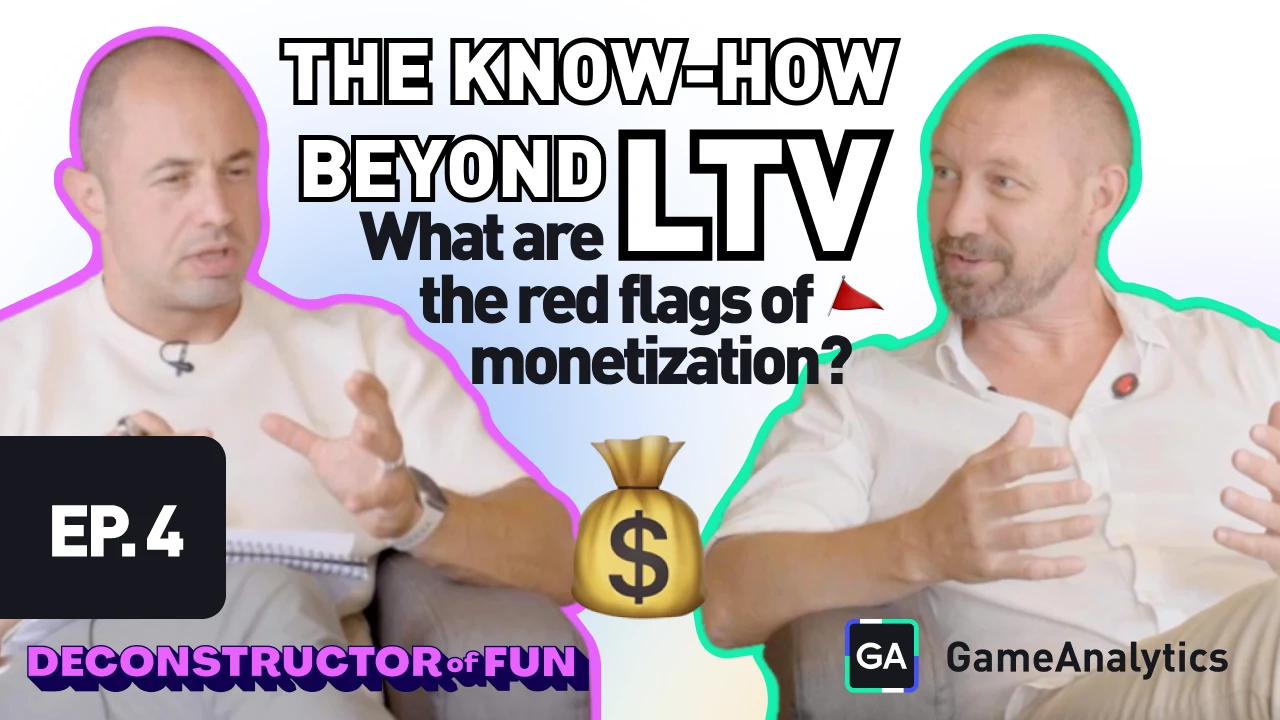
This article is based on the GameAnalytics Game Dev Masterclass series, created in collaboration with Michail Katkoff from Deconstructor of Fun. Jump straight into an episode:
- Episode 1: How game analytics maturity evolves: From dashboards to better decisions
- Episode 2: What marketability really means in games and how to test it early
- Episode 3: How to think about retention: From early validation to long-term game health
- Episode 4: What good game monetization really looks like
A great game does not automatically monetize itself. It helps, of course. But strong monetization is not something teams can simply “add later” without thought. It needs to be designed with the audience, product structure, and long-term business model in mind.
This is exactly what GameAnalytics explored in the final GameAnalytics Masterclass, created in collaboration with Michail Katkoff from Deconstructor of Fun. You can watch the full masterclass here.
One of the strongest early lines in the discussion sets the tone: “There’s no substitute for a great game, but you need to think about how you’re going to sell it and monetize it.”
That is the right starting point. Monetization is not separate from product design. It is part of the experience, part of the business, and part of how a game sustains itself over time.
Good monetization should feel good to players
One of the most useful ideas in the masterclass is that monetization is not inherently negative. A lot of teams still approach monetization defensively, as if it is something players tolerate rather than something they can actually enjoy. But the discussion pushes back on that hard.
The framing is simple: “Think about happy monetization.”
That means purchases should feel exciting, satisfying, and worthwhile, unlike a penalty, tax, or utility bill. The example given is strong: when a player buys something they genuinely want, like a coveted Fortnite skin, the feeling is not resentment. It is excitement. That is a much healthier way to think about monetization design. The goal is not just extracting value. The goal is offering value players are happy to buy.
Bad monetization is short-term monetization
The masterclass also defines bad monetization in a very practical way. It is not just monetization that looks aggressive. It is monetization that is not profitable in the long term.
That includes systems that:
- trick players into spending once and leaving
- create resentment instead of satisfaction
- hurt retention badly enough that they damage the business
- generate short-term cash at the expense of long-term value
Or, as the discussion puts it, “The shortsighted monetization, borderline scamming people, is obviously going to lead to bad results.”
This is an important distinction. Good monetization is not the same as soft monetization. A game can be highly monetized and still be healthy. The real test is whether players keep coming back and keep feeling good about what they spend.
ARPDAU is not enough
Most teams start with familiar monetization metrics: ARPDAU, conversion rate, and LTV. Those all matter, but the conversation argues that they are not enough on their own.
Two deeper metrics stand out in particular.
1. Spending spread
Instead of just looking at payers as one bucket, teams should look at how spending is distributed across them. Do you only have a few whales? Do you have a healthier spread from small spenders up through large spenders? The reason this matters is fragility. A monetization system that depends too heavily on a tiny number of top spenders is riskier than one with a broader base.
As the masterclass puts it, “The more even the spread, the less fragile your monetization is.”
2. Repeat spending rate
Another key metric is what happens after the first purchase. How many players who buy once buy again? And again? That matters because one-off conversion is not the same as healthy monetization. If second purchase rate is weak, it may mean the first purchase gave away too much, or too little, or simply failed to create satisfaction.
This is one of the strongest concepts in the masterclass: not every purchase matters equally. Good monetization earns the next purchase.
Why uncapped spending is not automatically bad
The conversation also takes a strong stance on spending caps. The argument is that if a player is genuinely satisfied with the game, they should be able to spend in proportion to that satisfaction. That does not mean forcing monetization harder. It means not artificially limiting players who are happily engaged.
The key quote here is: “Players should be able to spend according to the satisfaction.”
This perspective makes more sense when you think about games as hobbies. Most hobbies do not cap how much a participant is “allowed” to spend. The question is not whether someone can keep spending. It is whether the game keeps giving them good reasons to do so.
Hybrid monetization changes the shape of revenue
The masterclass also gives a very useful framework for thinking about hybrid monetization. When you add ads to a game, you increase the floor of revenue, because you can now monetize a much larger share of players. When you add in-app purchases, you raise the ceiling, because your top spenders can contribute much more value.
That is a very clean mental model:
- ads monetize breadth
- IAP monetizes depth
This is also why the right balance varies so much by genre. Hybrid casual titles may lean heavily on ads. Midcore and hardcore games often lean heavily on IAP, not because their players spend more overall, but because those audiences are less tolerant of ads.
As the discussed, players in more core genres “just see less ads because they’re less accepting to ads.”
Rewarded ads can help, not just hurt
One of the more interesting points in the discussion is that ads do not always reduce retention. Traditional ad monetization often does create friction, especially when ad load gets too high. But rewarded ads can behave differently. In some cases, they increase retention by giving non-paying players access to some of the value payers get.
The masterclass even frames rewarded video as a kind of “free trial of in-app purchase.”
That is a useful way to think about it. Rewarded ads can:
- keep non-payers engaged longer
- introduce players to value loops
- sometimes help convert them later into payers
The important condition is that they remain player-initiated and clearly rewarding.
Segmentation only works if the team can actually use it
The episode then moves into segmentation, and the key takeaway is practical: segmentation is only useful if the team can manage it. It is easy to copy the idea of advanced segmentation from top-grossing studios. It is much harder to copy the organizational muscle behind it. A big publisher may be able to handle hundreds or even thousands of segments because it has dedicated teams for analysis, LiveOps, offers, and CRM. Most smaller studios do not. That is why one of the strongest warnings in the transcript is against copying large-company playbooks without the same operating capacity. Or, put more simply: “It’s not about the number, it’s about what kind of complexity can you manage internally.” That is a useful principle well beyond monetization.
Monetization equilibrium is never final
The masterclass also introduces a helpful idea: monetization equilibrium. This is not a static point where the game is “done.” It is the moving balance point where pushing monetization harder starts hurting retention, conversion, or long-term profitability. The best explanation in the discussion is this: if you can still move one monetization lever without hurting another important metric, then you probably have not reached equilibrium yet. That also means the only way to find the boundary is to push too far at times and then pull back. As the transcript says, “You need to go one step too far and then reel it back.” That is one of the clearest descriptions of monetization tuning in the whole discussion. Balance is not theoretical. It is discovered through controlled pressure.
Retention is still the key warning signal
Even in a conversation focused on monetization, retention keeps showing up as the most important health signal. That is because monetization is not sustainable if it starts damaging the player experience too much. The same goes for conversion. If conversion rises only because players are being pressured to remove ads or escape pain, that may still be a bad long-term outcome. This is why the transcript returns to the same point several times: if retention or conversion starts dropping in the wrong way, you may be breaking the system rather than improving it.
Monetization cannot be judged in isolation from player behavior.
Sales work, but only if they are intentional
The masterclass closes with a useful reality check on sales and discounts. Yes, sales can generate revenue. Yes, they can also be used to test price points and elasticity. But they are very easy to misuse.
The biggest risks include:
- offering the same sale globally without local relevance
- discounting the wrong products
- training players to wait for the next sale
- shifting purchases in time rather than creating true uplift
That is why the takeaway is not “sales are good” or “sales are bad.” It is that sales are only valuable when they are timed well, segmented well, and designed with a clear understanding of player behavior.
Final takeaway
The clearest lesson from this masterclass is that monetization should be treated as a product system, not just a revenue system.
Good monetization:
- supports the business
- feels good to players
- creates repeat spending
- works across a healthy spread of spenders
- balances ads and IAP intentionally
- evolves through tuning, not guesswork
The final quote may be the strongest summary of all: “People love paying for games. They love making happy purchases.”
That is the mindset shift many studios still need. Players do not hate spending. They hate spending on things that feel unfair, manipulative, or disappointing. Great monetization is not about forcing the purchase. It is about making the purchase feel worth it.
FAQ
What is good monetization in games?
Good monetization is sustainable, enjoyable for players, and profitable in the long term. It should support retention rather than damage it.
Is ARPDAU enough to evaluate monetization?
No. ARPDAU is useful, but teams should also look at repeat spending, spending spread, conversion quality, and how monetization affects retention.
What is spending spread?
Spending spread refers to how payer spending is distributed, from small spenders to whales. A healthier spread usually means less fragile monetization.
What is repeat spending rate?
It measures how many players continue spending after their first purchase. It is a strong signal of whether monetization is satisfying enough to sustain.
Are rewarded ads bad for monetization?
Not necessarily. Rewarded ads can improve retention and sometimes help convert non-payers into payers when used thoughtfully.
How many segments should a studio use?
Only as many as the team can realistically manage and act on. Segmentation only works when the studio has the capacity to respond to what it learns.