7 Steps to build a winning creative strategy with Ad Insights

min read

If you’ve ever tried building a creative strategy from scratch, you know how easy it is to get lost in opinions and examples. Here’s a way to cut through the noise, a seven-step workflow that combines data, analysis, and iteration, powered by Ad Insights.
This article is part of the GameAnalytics Masterclass series, created in collaboration with Deconstructor of Fun. It expands on themes from Episode 2: Measuring Marketability, where Michail Katkoff (Deconstructor of Fun) talks with Stephanie Zhang (Head of Product Growth, GameAnalytics) and Frederik Vig (CMO, Trophy Games) about how studios can evaluate and improve their games’ marketability at every stage. Watch the full episode here:
Step 1: Identify the Leaders in Your Genre
You know the drill. Start by mapping the landscape, looking at top downloads, top revenue, and fastest-rising titles in your genre. Then narrow down by region and time frame to spot trends that are growing, not just those that already peaked.
Pro tip: Use the Top Promoted section to find who’s spending the most on ads right now. These are your real creative trendsetters.

Step 2: Define Your True Competitors
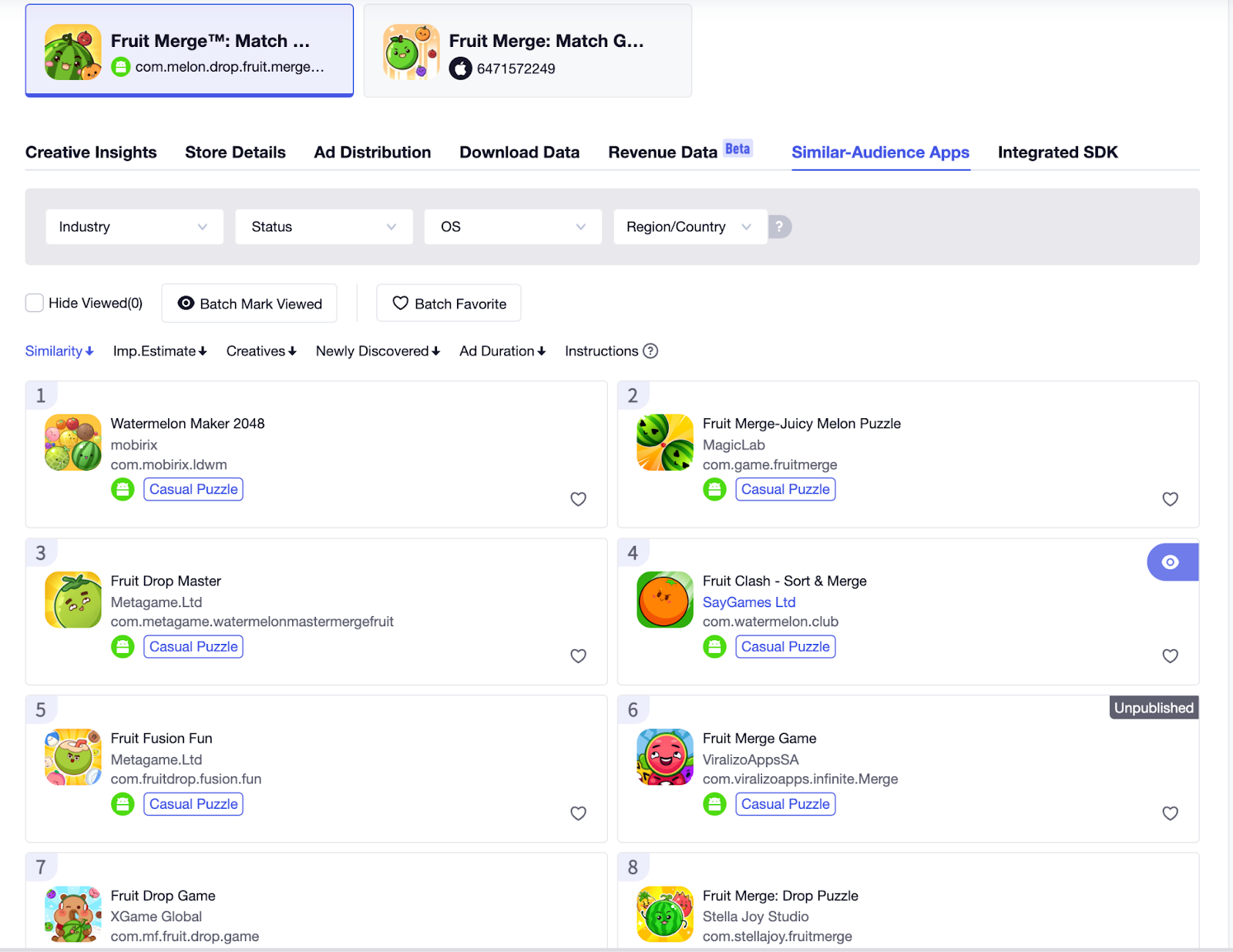
Your players don’t see genres; they see what excites them. That’s who you’re up against. Identify games that attract a similar audience. Build a list of 5–10 “real competitors” you want to track closely.
Pro tip: Use Similar-Audience Apps to uncover unexpected overlaps and hidden rivals.
Step 3: Analyze Game & Growth Signals
Look deeper at each competitor’s activity:
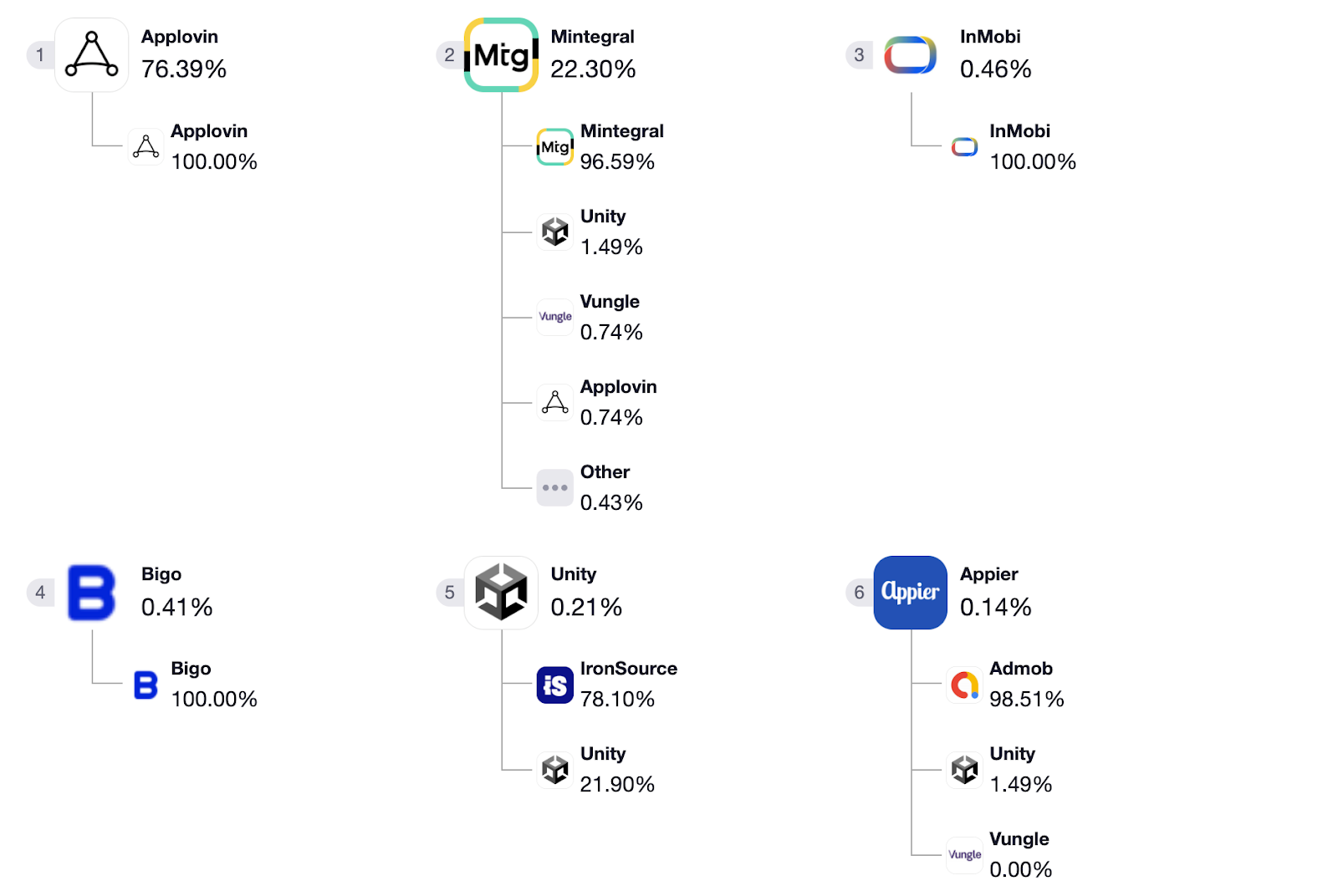
- Which ad networks are driving their growth peaks?
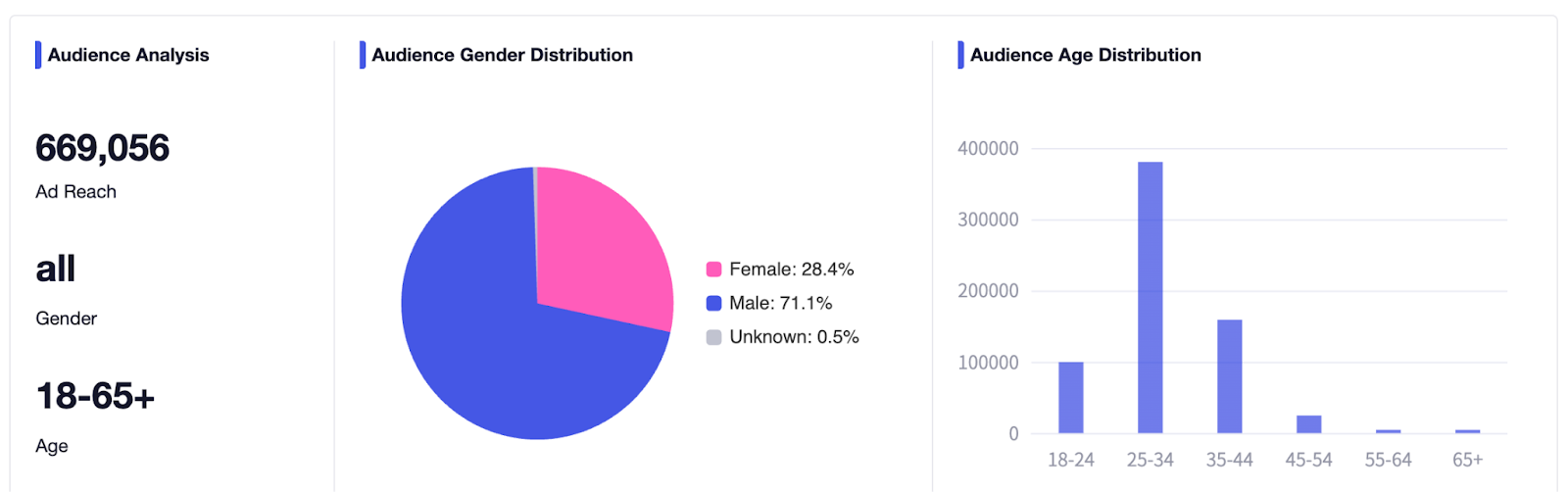
- What’s their audience mix (age, gender, region)?
- Which creative formats dominate - playable, video, or static?
MarketIQ Pro’s Ad Distribution lets you match ad activity with performance spikes, revealing which campaigns are actually driving performance.

Step 4: Dive into Creative Analysis
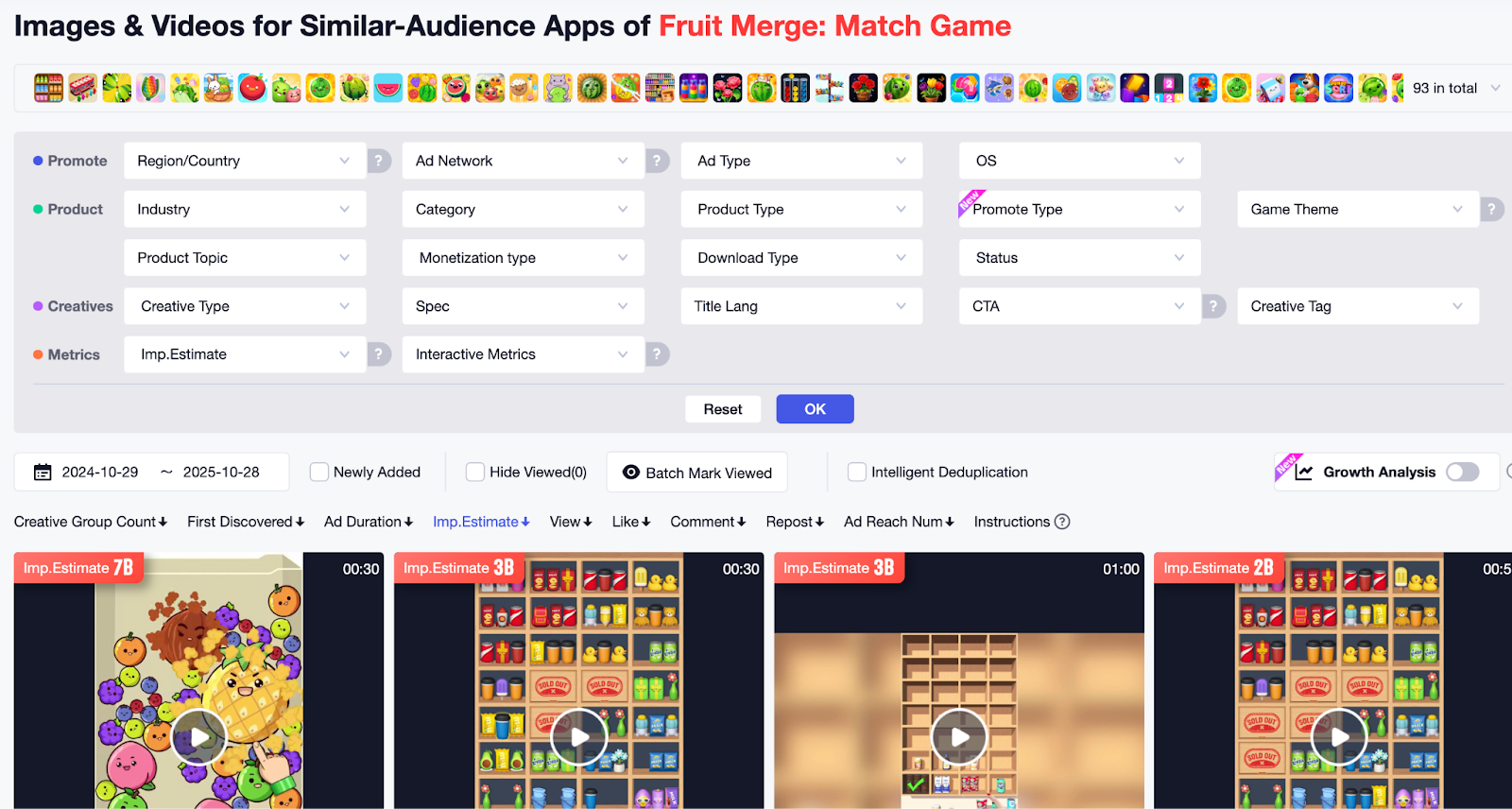
Search Ad Insights' Creative Library by genre, theme, or gameplay mechanic. Review top-performing ads that mirror your own core loop or art direction. When you look systematically, patterns start to surface fast.
Pro tip: Use Smart Creative Recommendation to speed up your search across games
Step 5: Extract What Works
Once you’ve curated your creative list, look for recurring elements.
Use AI tools to help summarise what combinations tend to perform - and where teams are trying new ideas.
Try this prompt:
You are a gaming industry UA creative strategist. Review these top-performing video ads for [genre] games. Break down what makes them effective from a user acquisition perspective by identifying:
- The hook
- The core loop shown
- The visual & emotional triggers
- The progression fantasy
- The UA ‘recipe’ or repeatable formula
Finish with a distilled summary: What unites all these winning creatives, and what are the best opportunities to improve or differentiate new ads?
Pro tip: Use these findings as starting points, not rules. Creative strategies evolve faster when you leave room to experiment.
Step 6: Turn Insight into Playbook
Translate findings into something actionable for your UA and design teams.
Document:
- Which competitors to watch
- What creative concepts to test next
- How early results are measured
Keep it visual. Short clips, screenshots, and quick benchmarks work better than long decks.
Step 7: Keep Benchmarking
After each round of production, compare your performance against industry benchmarks - CTR, CPI, or retention lift from ads. Group new concepts against proven ones and keep a feedback loop running.
The goal is to learn faster than the market shifts.
Bringing It All Together
Building a creative strategy isn’t a one-off project. It’s an ongoing process of discovery. Every data point, every test, every new ad format adds another layer to your understanding of what resonates with players. The best teams don’t chase trends; they spot patterns, adapt fast, and use data as their creative compass.
By following this workflow, mapping the market, defining real competitors, studying their signals, and translating insights into action, you’ll start seeing creative decisions as experiments, not guesses. Over time, this loop of observation, iteration, and refinement becomes your edge.
With tools like MarketIQ Pro's Ad Insights, you can connect those dots faster: discover what’s working, understand why, and keep your creative strategy evolving in sync with the market.