Pitch Labs built a fully autonomous product iteration workflow driven by agents. Product, data science, and engineering agents work together in a pipeline to decide what to ship next. GameAnalytics MPC Server feeds the loop with game data.

Challenge
Every game studio, whether traditional or AI-native, runs on data. During the soft launch, Pitch Labs' challenge was to empower agents to meet retention and monetization goals in a live product. The agents needed a clean programmatic way to read product analytics data. Before the MCP Server existed, the team accessed their GameAnalytics data via an agent-driven browser. It was reliable, but not scalable; it was the wrong shape for what they were building in the long term. Browser-use agents can be fragile, slow, and hard to reason about. It's also not a data layer, but rather a workaround in the absence of one.
Solution
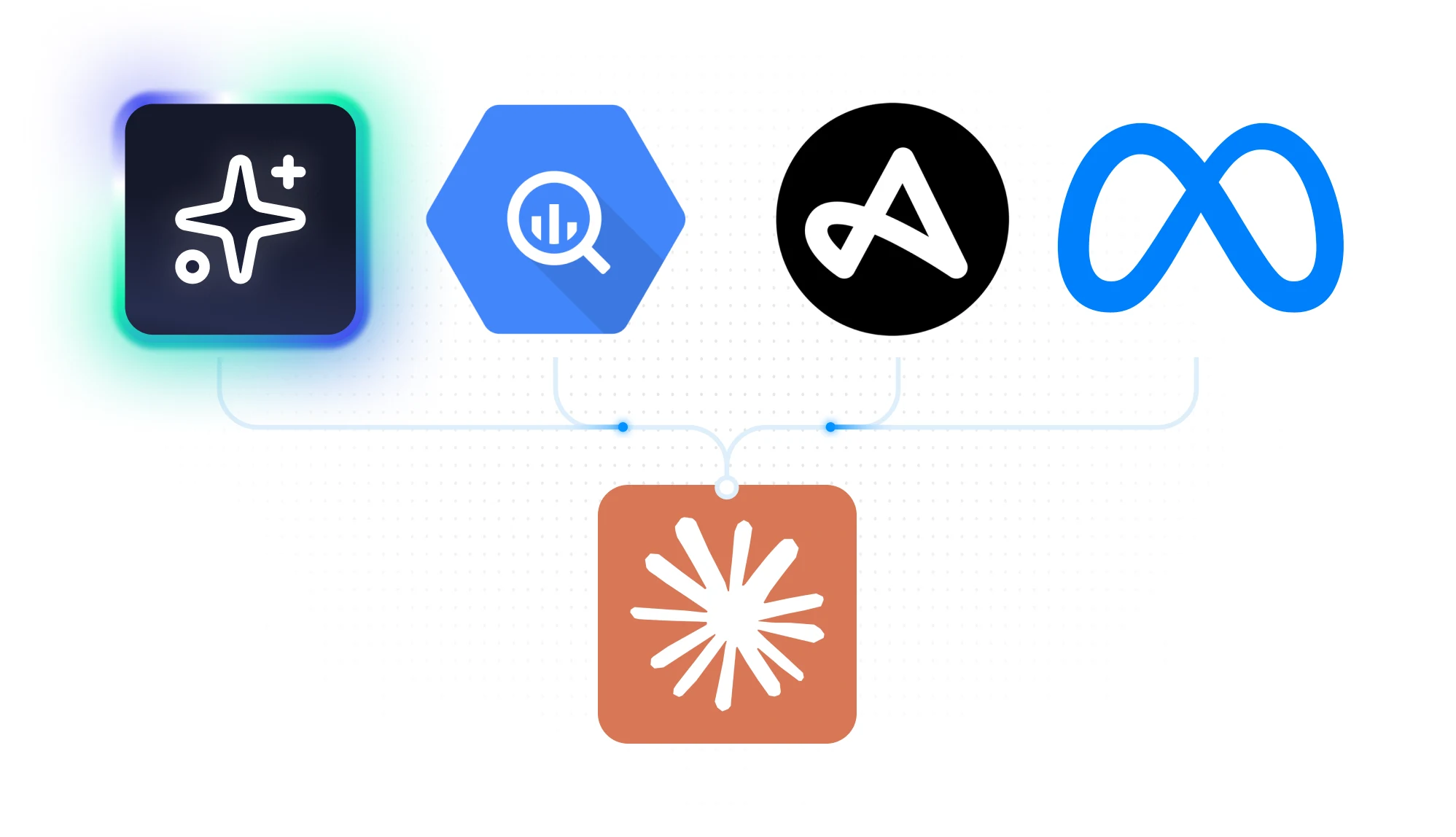
Pitch Labs' agent loops operate across different models and harnesses. The product iteration loop, specifically, is driven by specialized agents with a “product manager” agent running orchestration. A data science agent regularly interfaces with the data layer, querying the GameAnalytics MCP Server alongside other sources such as a production database replica via BigQuery, AppsFlyer for attribution, and TikTok and Meta ad networks via CLIs and MCP servers. The product manager agent, informed by the data science agent, translates the findings into specs. Those specs land with an engineering agent, which ships them with Unity’s agentic capabilities. The daily loop runs with a goal set at the top of each cycle. For example, improving D1 retention.
About Pitch Labs
Pitch Labs builds agents to build mobile games. Currently, they are working on Matchday, a free-to-play casual game, where fans collect officially licensed players, build their squad, and climb the leagues. The game is in soft launch, which started during the 2026 FIFA World Cup.
The agents run an entire mobile game studio, from design and economy balancing to coding and live-ops. They have set out to answer the question: can agents build hit mobile games with minimal humans in the loop?
Behind the scenes, one of the many agent loops they are building is ambitious: a fully autonomous product iteration loop in which AI agents handle the decisions humans normally make about what to build and ship next.
Why the MCP Server matters here
The GameAnalytics MCP Server replaced browser automation as the data access layer. For a pipeline that already had multiple data sources feeding in through their own integrations, that was significant.
"MCP access is crucial in building any autonomous agent pipeline, especially for product analytics. The moment GameAnalytics launched the MCP server, we immediately upgraded our pipeline. " - Derrick Ko, CEO & Co-Founder, Pitch Labs
That change matters because of what Pitch Labs is actually trying to achieve. They're not trying to help humans make better decisions with their game data, but to remove humans from those decisions (almost) altogether.
"With continued access and improvements, our goal is to have our agents become the sole customer of GameAnalytics, not humans." - Derrick Ko, CEO & Co-Founder, Pitch Labs
The vision behind it
Pitch Labs is driven by the core belief that their models and agents, with the right training and evaluation frameworks in place, can make product iteration decisions without humans in the loop.
"We believe that agent loops developed with our evals can make superior product decisions to humans, when provided with the same data sources." - Derrick Ko, CEO & Co-Founder, Pitch Labs
The direction is clear. Humans review at the start, calibrating and tuning the stack, and agents take over the parts of product iteration that once required constant human attention.
How the GameAnalytics MCP Server fits into modern AI workflows
Pitch Labs’ approach to loop engineering is a look at where AI in game development is heading. The GameAnalytics MCP Server sits inside multi-agent loops alongside BigQuery, AppsFlyer, and ad network MCPs. Not as the whole, standalone workflow. It's the data node responsible for one part of a larger system.
That's the kind of story we're building for. Studios building agent-driven pipelines don't need a new AI tool, but need every data source to be readable by their agents. The MCP Server is how you can make GameAnalytics data readable by any agent stack out there.
How it works
The GameAnalytics MCP Server, available with PipelineIQ Pro, is a bridge that connects your game data to AI assistants like Claude, ChatGPT, Codex, Gemini, and Cursor. Instead of writing custom scripts or automating browser access, you let your agent query your data directly and get the analysis back, structured and ready to act on.
For Pitch Labs, that meant replacing an agent-driven browser with a proper data layer, one their data science agent could call natively alongside every other data source in their pipeline.