PipelineIQ: Ready-to-use data infrastructure for games

min read
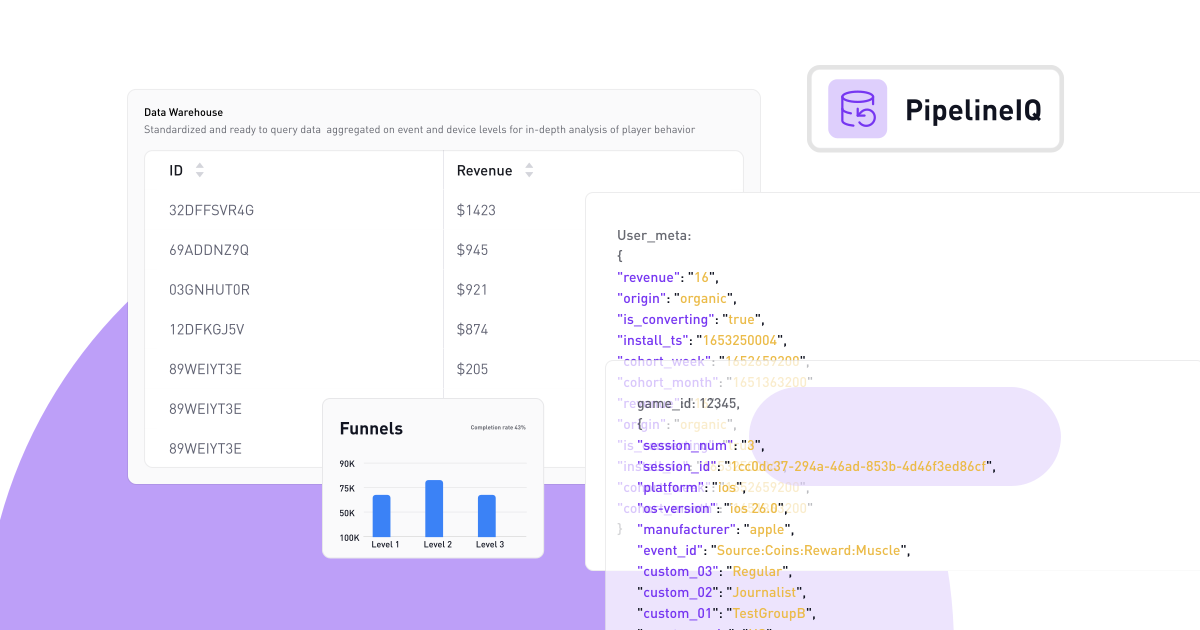
GameAnalytics has evolved. With the new IQ Suite, we’re transforming years of data expertise into a connected set of tools that help studios of every size understand their players, refine their strategy, and grow with confidence.
Developers more often face a tricky challenge: building and maintaining the data pipelines that power complex game operations. Setting them up takes months, requires dedicated engineering resources, and often results in fragile systems that don’t scale well across platforms like mobile, console, Roblox, or PC. For many studios, this slows down their growth and keeps teams focused on infrastructure rather than the game itself.
Therefore, it is no surprise that building a reliable data pipeline is one of the most challenging tasks. It demands engineering time, creates ongoing maintenance work, and often results in fragile systems that struggle to scale. Smaller studios hit roadblocks before they even start, while larger ones find themselves wasting time reinventing the wheel instead of focusing on game development.
That’s what PipelineIQ addresses. It provides ready-to-use, reliable data pipelines built specifically for games, giving studios the foundation they need without starting from zero.
We’ve put together a whitepaper that breaks down the pros and cons of building your own pipeline versus using a ready-made managed one.
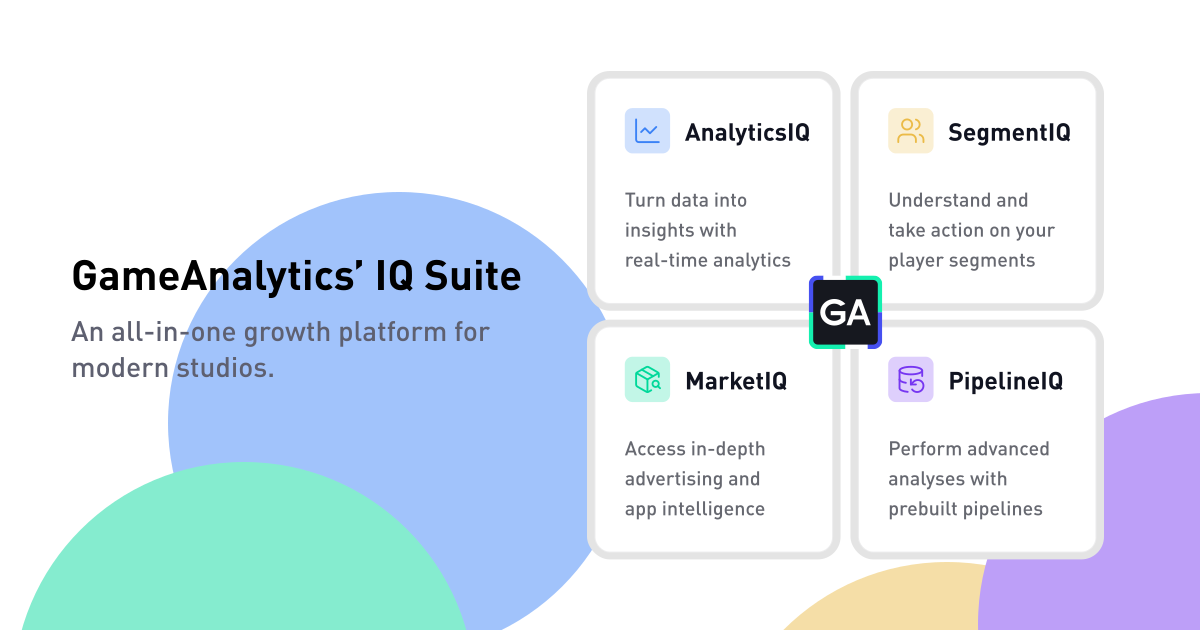
Fast to deploy and fully scalable, it fits neatly into the broader GameAnalytics portfolio. Working alongside AnalyticsIQ for insights, SegmentIQ for player targeting, and MarketIQ for creative intelligence. Together, these tools form a complete ecosystem that helps studios manage data, understand players, and grow smarter.
The problem with traditional pipelines
Traditional pipelines take months to set up, and even then they rarely hold up under the demands of modern game development. They are expensive to maintain, require dedicated engineering resources, and often fail when moving from a single platform like mobile to multi-platform releases on Roblox, PC, or console.
Setup was surprisingly easy. Install the SDK, create a game in their tool, and link the two. Now you are good to go. - David Smit, Roamer Games
This creates a constant trade-off. Studios either rush to launch a pipeline quickly, knowing it won’t be reliable, or they invest months into building something stable, delaying insights and slowing down growth. Either way, progress suffers.
What is PipelineIQ
PipelineIQ eliminates infrastructure barriers by giving you prebuilt pipelines for game event tracking and storage. It’s designed for speed, letting you deploy in days instead of months. At the same time, it scales reliably as your portfolio grows, ensuring consistent data across multiple titles and platforms.
It also gives studios flexibility. You can customize pipelines for unique in-game events, integrate seamlessly with external BI tools, and export data to BigQuery, S3, or Google Cloud. Instead of spending resources on infrastructure, you can focus on analyzing data, running experiments, and improving your games.
The data tools that GameAnalytics offer are incredibly powerful. We now have access to an enormous amount of data through BigQuery. It requires some good knowledge of SQL, but it’s the way to go if you want to dig deep into the product and what happens to these users. Once you understand the different databases and workflow, you can get incredibly granular and hone in on any specific point in the game. - David Smit, CPO at Roamer Games
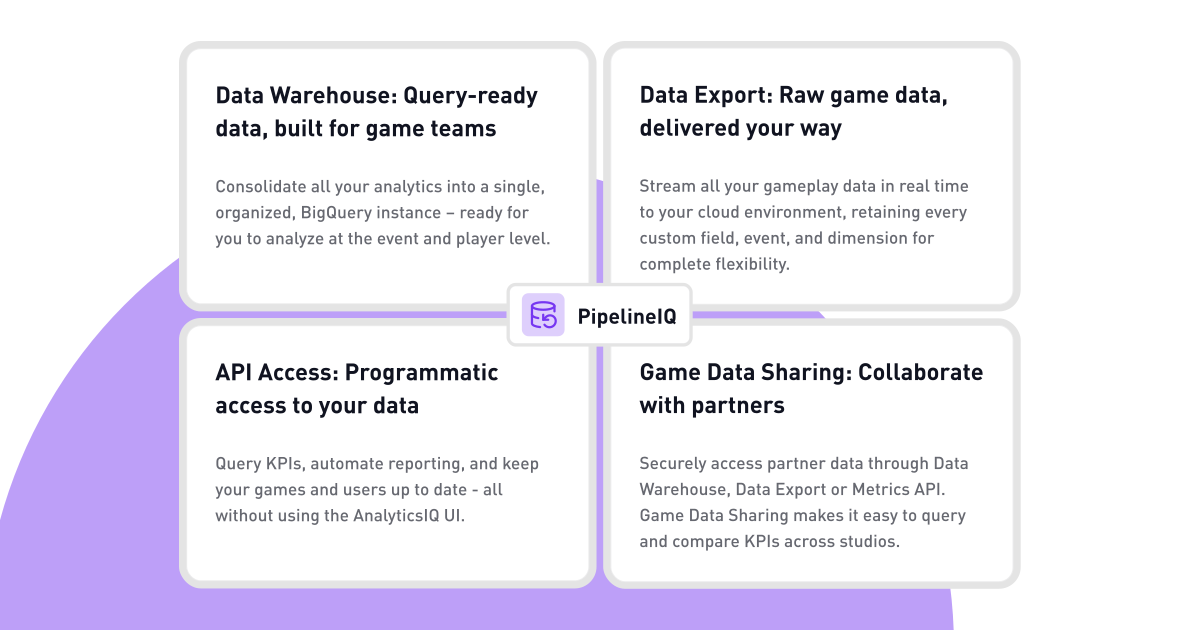
PipelineIQ is built around three powerful modules - Data Warehouse, Data Export, and API Access - giving developers, analysts, and technical directors the flexibility to access, query, and act on game data in whichever way fits their workflow best. Additionally, for those collaborating with other studios or managing a portfolio of games, Game Data Sharing makes it easy to query and compare KPIs across studios, enabling deeper collaboration and growth opportunities.
Data Warehouse
Think of this as your no-hassle data workbench. Analysts can dive directly into raw gameplay events with advanced SQL queries, without waiting on engineers to set up custom SDKs or storage solutions. With event and player-level granularity, the ability to connect data from multiple sources, and the option to download or programmatically access datasets, your team gains full autonomy. The best part? Setup and transfer into a managed BigQuery instance takes days, not months.
You’d usually need another Data Engineer to sort out the analytics pipeline. Using Data Warehouse means that you can just hire one person to manage this one tool and use that data. If I didn’t have access, I wouldn’t be able to output anything useful. - Rahul Jani, Data Engineer at Happy Volcano
Data Export
For studios that want total control, Data Export delivers raw gameplay data straight to your infrastructure. Whether you’re running custom analyses, building internal tools, or experimenting with advanced visualizations, this module ensures you can work on your terms. Connect it to AWS, Cloud Storage, or your data lake of choice, and start piping data in just a couple of days, skipping months of R&D and infrastructure costs.
Data Export is a highly reliable product. It allows us to use our game metrics effectively, while focusing on our core algorithms. All without putting time and effort into maintaining data collection services. - Philippe Grazina, TapNation
API Access: Programmatic access to your data
When you need KPIs on tap, Metrics API provides pre-processed, aggregated data designed for instant use. Track player behavior, retention, monetization, and more, and make that data available in real time to your BI tools and dashboards. Whether you’re monitoring campaigns, building custom reports, or comparing performance across multiple titles, Metrics API ensures key stakeholders always have the numbers they need.
With the use of Organization API, you can also automate the creation and updates of studios, games, and users. It allows you to manage access control and streamline organization-level workflows, saving time and reducing manual effort.
We review countless prototypes each month. Metrics API gives us the retention insights we need to quickly identify which games to scale and which to kill - while helping partners spot trends, refine features, and increase retention. Using the different SDKs with Metrics API, we we can synchronize insights and ensure data-driven decisions that make a huge impact on our partners’ success. - Hugo Peyron, Publishing Expert at Voodoo
Game Data Sharing
Game Data Sharing sets PipelineIQ apart. It allows you to securely collaborate with partners, exchanging and comparing KPIs across studios. Whether through Data Warehouse, Data Export, or MetricsAPI, this feature enables joint analyses and deeper insights, unlocking growth opportunities that no standalone pipeline could deliver.
Studios building on PipelineIQ
Many studios have been using PipelineIQ for years to remove infrastructure headaches and get instant access to user-level data. Happy Volcano streamlined their reporting by sending game data directly into their BI tools without having to maintain pipelines in-house. Paradoxum Games, known for their massive Roblox experiences, use it to reliably handle millions of players at scale. Roamer Games combined PipelineIQ with AnalyticsIQ to quickly uncover player progression and retention insights, saving weeks of engineering work.
Build on a strong foundation
PipelineIQ gives you a ready-made backbone for your data strategy. Instead of wasting months building pipelines from scratch, you can start analyzing data, improving player experiences, and scaling your portfolio almost immediately. Whether you’re a small team that needs a fast, reliable setup or a large studio managing multiple platforms, PipelineIQ provides the infrastructure you need to move faster and smarter.
Ready to see it in action? Discover how PipelineIQ can become the data foundation for your next hit game:
We export data from GA into our S3 buckets and then read the data daily using Databricks. This allows us to create dashboards and tables that are essential for our operations, especially for tracking level progressions and visualizing custom events fields. - Furkan Enes Yalçın, Data Engineer at Alictus